
Main Category
Best Supercars
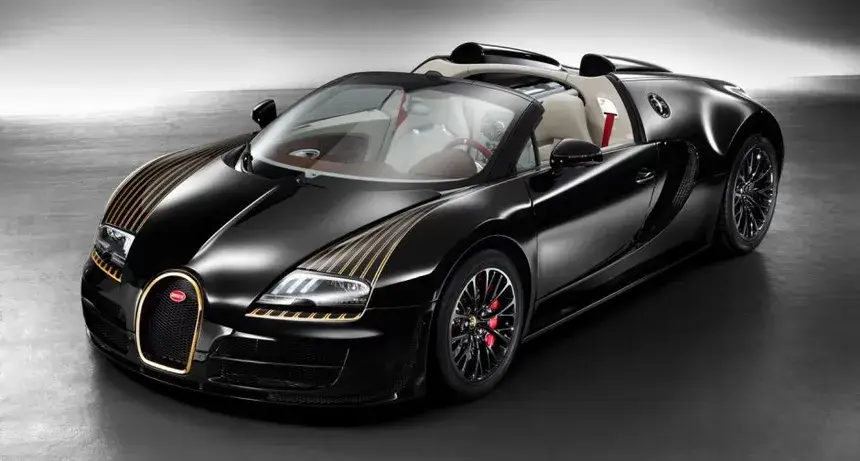
Bugatti Chiron Super Sport
The Veyron’s reign as the world fastest production car is at an end, and the usurper comes from within. Yes, the £1.9m Chiron retains the Veyron’s fundamental proportions and powertrain, but it’s new in every other conceivable way, and built to bend physics to breaking point.
The Chiron is not a hybrid. Unlike its closest competitors – the McLaren P1, LaFerrari and Porsche 918 - it relies solely on fossil fuels. Its engine is a development of the Veyron’s 8.0-litre quad-turbo W16, its gearbox a strengthened version of the Veyron’s seven-speed twin-clutch, and like the Veyron it deploys its immense power through all four wheels.
“If we went with hybrid we would have added additional weight. We would have experienced package constraints, too, because this car doesn't have any areas where you can put additional stuff, so the styling would need to change,” Wolfgang Durheimer, Bugatti’s CEO explained. “We will dramatically raise the bar in terms of top speed, we will dramatically increase the power by 25 per cent, the aerodynamics are better, the road holding is better. We didn't need a hybrid.”
Whereas the Veyron Super Sport produced a piffling 1183bhp and 1106lb ft of torque, the Chiron develops 1479bhp and 1180lb ft. Oh, and at a constant top speed the Veyron could drain its 100-litre fuel tank in 12 minutes, the Chiron can do it in 9.
Clearly this is a game of very senior numbers, so here’s some more. It will accelerate from 0-62mph in less than 2.5 seconds, 0-124mph in less than 6.5 and 0-186mph in under 13.6. Take a moment to let that last one sink in. That’s 2.9 seconds faster than a P1 and a second quicker than the Veyron Super Sport, bearing in mind that at 186mph a second equals a lot of fresh air - 83m of it to be precise.
Then there’s the top speed, which Bugatti has limited to 261mph on the standard Chiron - a token 3mph more than the Veyron Super Sport - but raised to 273mph on the £2.6m Chiron Super Sport. That’s the elongated and pumped-up version that Andy Wallace drove at 304.773mph in 2019 – the first series production car to break the 300mph barrier. Well… a close approximation of it at least. You see, off the back of that speedy day out at Ehra-Lessien, Bugatti announced it would build 30 Chiron Super Sport 300+ special editions, visually and mechanically based on the record-breaking car (albeit limited to 273mph for tyre and life preservation purposes), with the same 8.0-litre quad turbo W16 engine boosted by 100 to 1,578bhp, all 30 in the same black-with-orange-stripes livery and costing £3m each. On top of that there’s the mechanically-identical ‘standard’ Super Sport model available in any colour you like… so long as you don’t copy the 300+ edition.
Key to the engine’s swollen power reserves are four larger turbos that work in tandem to deliver maximum torque from 2000 to 6000rpm – that’s across 70 per cent of the engine’s full operating range. The two-stage system only calls on two turbos up to 3800rpm, to improve throttle response, and all four beyond that. A new titanium exhaust system helps out by reducing back pressure compared to the Veyron and houses two enormous catalytic converters – each six times the size of one you’ll find in a Mondeo. There are six exit pipes in total – four sticking out the back and two pointing downwards to create a blown diffuser – a downforce-boosting technology proven by, then subsequently banned in F1.
Everything about the Chiron’s powertrain is super-sized. An improved charge air cooling system means 60,000 litres of air per minute are pumped through the engine, while the coolant pump can circulate 800-litres in the same time. According to Willi Netuschil, head of engineering “temperature management is one of the biggest problems”. In total there are 10 radiators crammed under the Chiron’s skin.
With great power comes great need for big brakes, so the front and rear discs are now 20mm larger, 2mm thicker and made from carbon silicon carbide – a material that’s both lighter and more resistant to fade. Clamping them are eight-piston calipers in the front and six-piston at the rear – each piston a subtly different diameter to keep brake wear even.
The tyres, now 14 per cent wider at the front and 12 per cent wider at the rear, are wrapped around larger rims – 20-inch front and 21-inch rear – and built to withstand otherworldly forces. They need to be, as each gram of rubber is exposed to a centrifugal force of 3,800G. A bigger contact patch on the road means better braking, acceleration and wet-weather grip, while the updated four-wheel drive system uses electronic diffs on the front and rear axles, allowing fine control of the handling characteristics. More on that in a bit...
As a starting point for the world’s fastest car Bugatti uses a new carbon-fibre monocoque (each one takes four weeks to make), with a carbon-fibre rear-subframe attached to save 8kg versus the Veyron and boost rigidity, while the entire package is wrapped in a carbon-fibre skin. Bugatti claims torsional stiffness is now up there with an LMP1 prototype, while a new electric steering system and suspension bolted directly to the monocoque means it should react to inputs faster than a 1995kg car has any right to.
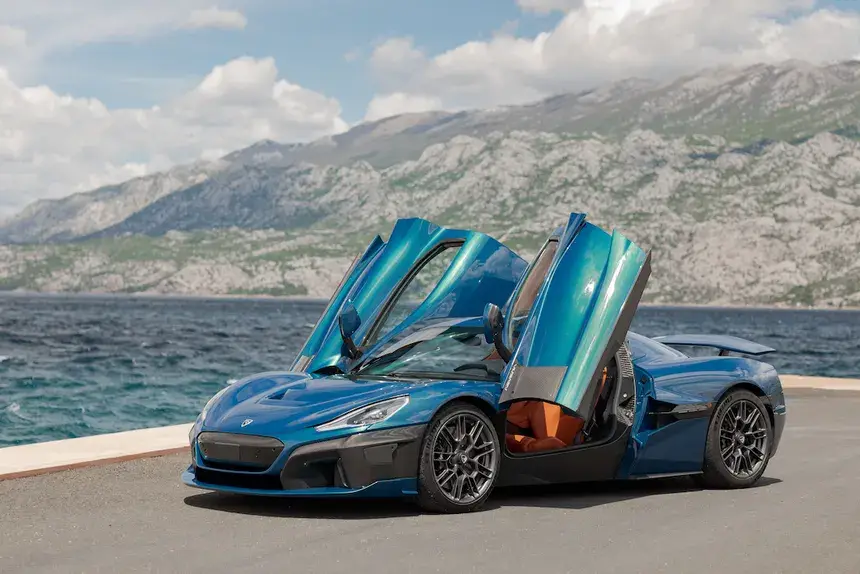
Rimac Nevera
Google. Facebook. Amazon. One of the most fascinating things about the digital world in which we now live is that the tech titans which dominate it seemingly came out of nowhere, and not that long ago either. The old order got scrambled, fast.
Legacy automotive is doing its best as the electric revolution gathers serious momentum but from the land of Tesla – Nikola that is, not Elon Musk’s outfit – comes a company whose new car turns everything you thought you knew about hypercars on its head. Should you still be clinging to the notion that EVs are somehow missing something, prepare to be converted. Forever.
You’ll have heard of Croatian upstart Rimac, of course, and if you read TopGear.com regularly you’ll be acquainted with the company’s CEO and founder, Mate Rimac. As with the likes of Steve Jobs, Mark Zuckerberg, Jeff Bezos and yer man Musk, a certain cult of personality has grown up around Mate, partly because the internet likes that sort of thing, but mainly down to the fact that he has a brain the size of a planet and doesn’t stop until the ideas pinging around his head are made real.
While there’s a certain familiarity to the Nevera’s form language, this ain’t no piece of exotic vapourware. Given the car’s vast performance potential, the shape is largely dictated by aerodynamic and cooling requirements, although it does still feature Rimac’s signature ‘cravat’ motif ahead of the rear wheelarch.
“The neck-tie has provided a symbol of Croatian strength and identity since the 17th century,” says the company’s design director, Adriano Mudri, although like everything it’s also functional: in this case acting as an air intake for the rear cooling systems.
The Nevera’s body – the diffusers, intakes, splitters and radiators – have been worked over tirelessly by an army of CFD experts to deliver a 34 per cent improvement in aero efficiency compared to early prototypes. The front bonnet profile, underbody flap, rear diffuser and rear wing can each move independently, and switching from a low drag mode to a high downforce setting has a profound effect: the latter increases downforce by 326 per cent.
Packaging all those batteries is no mean feat, so props to all involved for delivering such an elegant looking car. Rimac wanted something that was easy to use, with a decent H-point and above average-for-a-supercar-visibility.
Job done: the butterfly doors eat into the roof in a Ford GT-like manner and you don’t need to be a Soviet gymnast or Yoga master to get in and out. The view ahead is clear, the car easy to place on the road, rear visibility not bad. And when you pull those doors shut they close with the resounding finality of a cell door in a Belarussian detention centre. Watch the Nevera on the move and the more you appreciate the nuances of its shape.
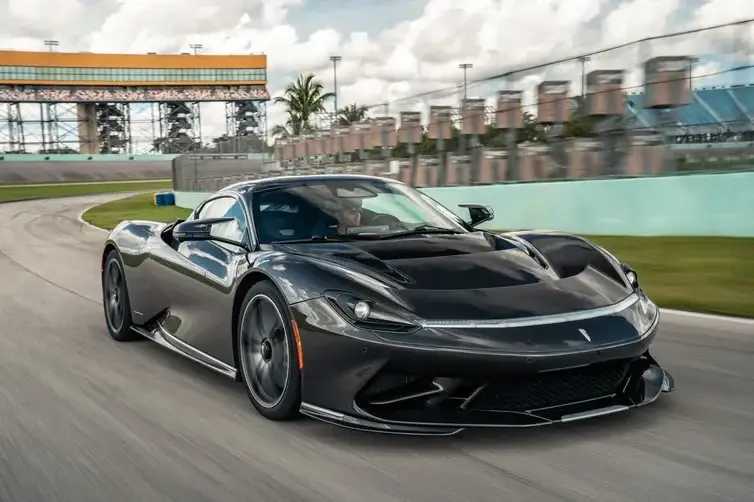
Pininfarina Battista
This is the future of really, really fast things. It’s the sister car to the Rimac Nevera, so based around the same powertrain technology, electrical architecture and carbon core – but is draped in a body and interior of Pininfarina’s design. Despite being Italy’s most famous design house and owner of a back catalogue that stretches back 91 years and includes slam dunks like the Ferrari F40 and Cisitalia 202, this is the first road car to ever wear the Pininfarina badge… and the most powerful Italian car ever made.
forgot to mention, this is an all-electric hypercar, sorry Hyper-GT. No queuing for £20 of fuel in this £2m slice of carbon and lithium, you simply top up via the optional (Pininfarina-designed and colour-coded to your car) Residenza wall box in your enormous glass-floored garage, and go about your day. Pininfarina claims a range of 310 miles (500km) on a charge – if you drive like a learner – courtesy of a 120kWh, T-shaped battery that sits down the spine of the car and wraps around behind the seats.
It’s fast. Massively fast. Four motors, one for each wheel, enable full torque vectoring – that’s to say the power can be sent instantly to wherever it’s needed most – and combine to produce a headline figure of 1,874bhp and 1,696lb ft of torque. For reference that’s the twist of 2.4 LaFerraris. Zero to 60mph takes sub 2 seconds, 0-186mph takes less than 12 seconds, top speed is 217mph and if you can find a 180kw DC charger you can top up from 0-80 per cent in 40 minutes.
Arguably it’s that last number that’s most relevant in the real world, because the biggest headache of Battista ownership is going to be finding somewhere wide, long and private enough to unleash its full performance, even for a few seconds. Fortunately, we had a NASCAR oval and infield to ourselves… more on that in a bit.
So it’s Premier League quick, but lap times and quarter-mile sprints aren’t necessarily the Battista’s main concern. The car it shares its undercrackers with – the Rimac Nevera – is unashamedly the tech-geek’s wet dream, this is more about old school luxury and design. There’s an outrageous surplus of performance, sure, but it’s all wrapped in a classically beautiful carbon-fibre shell, uses the world’s finest materials and comes with endless customisation options that mean each of the 150-car run will be unique. Somebody in Pininfarina’s press department deployed The Maths and calculated that “the total number of possible individual designs stretched to 13.9 quintillion.” I have no idea how many that is because I ran out of fingers, but it sounds like A LOT.
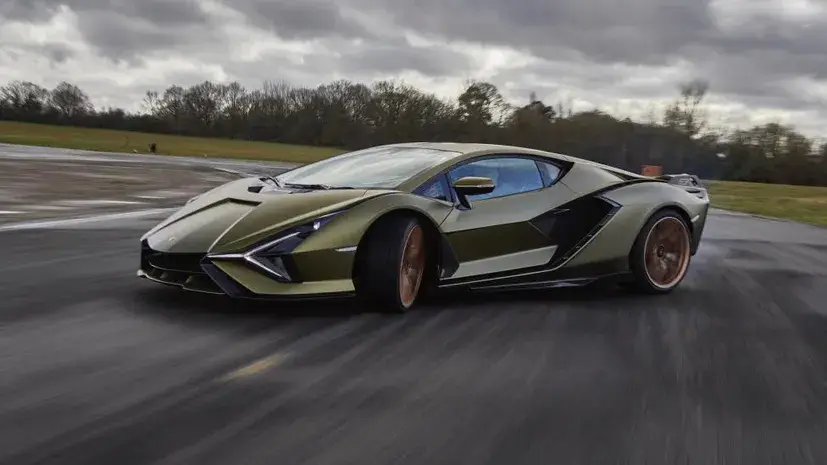
Lamborghini Sián
The most complicated car Lamborghini has ever produced. Yes, it’s shown us the Terzo Millennio with its batteries-for-body-panels and the V10 plug-in hybrid Asterion in the past, but both of those were pure concepts. The Sián is the first production Lamborghini to feature electrification. Which means you can actually buy one. Well, you could… they’re sold out, despite costing a spectacular £2.5m each.
But you’re unlikely to see two of them in your local multi-storey car park, because Lamborghini is only building 63 coupes and 19 roadsters. Numbers that pay tribute to the year Feruccio Lamborghini founded the company: 1963. In fact, there’s brown-nosing galore because the full name is Sián FKP 37: Sián (pronounced Sea-Ann, apparently) means flash or lightning in Bolognese dialect, the FKP bit is a nod to late VW Group chairman Ferdinand Piech and the 37 refers to 1937 – the year he was born.
It possesses a tuned version of the Aventador SVJ’s 6.5-litre, naturally-aspirated V12, producing 774bhp on its own – that’s already 15bhp more than the SVJ. To that is added another 34bhp of electrical oomph for a total of 808bhp, which is a lot. Enough for 0-62mph in less than 2.8 seconds and a top speed of around 220mph, claims Lambo.
This isn’t any old hybrid system either, it uses lithium-ion supercapacitors instead of a normal battery pack. Supercapacitors are interesting for several reasons: although they can’t hold as much energy as a regular lithium-ion battery of the same size and weight, they have three times the power density (the speed at which the energy is delivered) and can charge much more rapidly too. In other words the supercapacitors are fully topped-up every time you brake and therefore poised to torque fill during gearchanges, or add boost when you get back on the throttle. The upshot of all this is the supercapacitors don’t need to be big. The whole hybrid system weighs just 34kg - 1kg per horsepower added.
There’s a Countach connection on the exterior - the triple taillights, the Periscopio-style roof scallop, the dent in the bonnet, the intakes on the door – all a nod to the original poster car, and it’s a brutal thing to try and get your eyes around. Those headlights in particular – lifted from the Terzo Millennio concept, but also a nod to the next-gen face of Lamborghini – add an extra-terrestrial quality to the front end.
Around the back, a pop-up spoiler that rises to sit flush with the carbon fins either side, is the obvious party piece, but we prefer the four square cut-outs just below the slatted engine cover. Vents that open when the exhaust temp hits a certain threshold, but do so without any electrics – just a set of a springs and a magic material (that Lamborghini won’t talk about) that deforms under extreme heat to open the vents and expel heat. Clever stuff. File that and the electrochromic roof panel – switchable between clear and opaque via a button on the dash – under cool-stuff-to-show-off-to-your-mates.
A hybrid then, but a mere toe in the water for Lamborghini, a precursor of what’s to come with the Aventador and Huracán replacements – rumoured to keep their naturally-aspirated V12 and V10 alive with supplementary electricity, possibly a more conventional plug-in hybrid setup. But that’s to come, this is now.
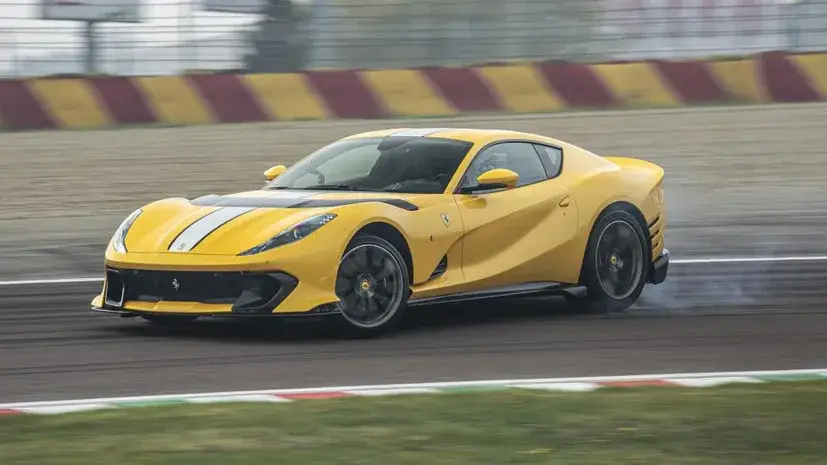
Ferrari 812 Competizione
Quite possibly the end of an era – so get those tissues ready – as the 812 Competizione might well be the last Ferrari production car to get a raucous naturally-aspirated V12 without the assistance of any e-fizz or turbos. No matter how many times - or bluntly - we asked, Ferrari’s Puma-clad engineers dodged the question like greased politicians. Whether we like it or not, we know there’s a sell-by date on these big, thirsty, exciting twelve cylinders. And we’ve already seen forced induction and hybridisation come in to do some of the heavy lifting with regards to horsepower at Ferrari. But, if this is the last hurrah, it's quite a remarkable bit of punctuation to end an age of engines.
The 812 Competizione is the pumped up and finessed version of the 812 Superfast. A 789bhp front-engined two-seat super GT that wasn’t named ironically. So think of the 819bhp 812 Comp as an 812 Superfaster. Or VerySuperfaster. It follows on from a spiky lineage of race-inspired front engine rear-wheel-drive V12 Ferraris; the brow moistening 599 GTO and psychotic F12tdf. Both of those required substantial bravery to tame, and the newest evolution isn’t any less intimidating.
Look at it. It's vicious, angular, and menacing. A technical and visual representation of trickle-down technology from Ferrari’s Billionaire’s Boy Club R&D facility, the XX programme. It looks like a modernised, road-going version of the 599XX race car. Because it basically is. The Comp is what happens when you give Ferrari’s biggest boffins an 812 Superfast, wind tunnel and dyno room and tell them “No Nintendo or Nonna’s pasta until you’ve made an 812 Superfaster!” What they did come back with was an apex predator in the Ferrari lineup.
It’s the same 6.5-litre block as the standard 812 Superfast but the internals have been refined and triple distilled for more performance. The pistons have been redesigned, the titanium con-rods are 40 per cent lighter, while a diamond-like carbon (DLC) coating shrouds the piston pins. There’s a rebalanced crank (three per cent lighter than before), new cylinder heads, F1-tech for the cams, a redesigned intake system (across manifold and plenum) and variable geometry inlet tracts.
Better than that, the redline has elevated itself to a God-like 9,500rpm. All being told, power is now at an outrageous 819bhp while torque is 513lb ft. All fed through a seven-speed dual-clutch gearbox. And the rear wheels. But if you think the engine is shocking, just check out the way it looks.
Weighing 38kg less than a standard 812, the Comp is dressed in an armour of fast. Aero is the name of the game and the simulations shown in the car’s technical presentation were so colourful and vivid we were half expecting a shaman to have to be present in the room.
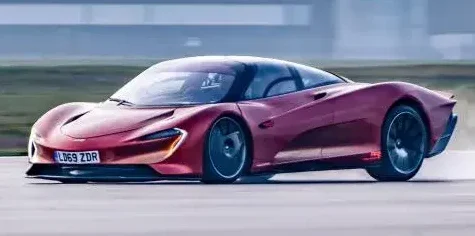
McLaren Speedtail
Someone cleverer than I am will be able to explain why placing the steering wheel and the driver’s seat in the centre of a car’s cabin makes it feel so special. Why it tugs at the emotional connection between man and machine so much more than it really should. I can only really speculate, but the moment you pop the McLaren Speedtail’s dihedral door and shuffle over a passenger seat squab and then settle into the slender, solo bucket seat, the £1.75m price becomes irrelevant.
Instantly, you are any of the things your inner car-child could possibly dream – a fighter pilot, a racing driver, a McLaren F1 wannabe. I did just this, and enjoyed a few moments placing my hands on the wheel and enjoying the symmetry afforded by a central driving position – actually, maybe that is the answer to the question. We’re told that the key to human designations of true beauty lie in symmetry, and the way the identical views left and right of the familiar McLaren rev-counter register is just immensely pleasing.
Increasingly, the static drama supercars can generate is the currency on which they trade – the opportunities to use any of the performance are just too infrequent. As-quoted performance has become less and less important, the need to dazzle with bizarre styling and violent, aggressive shapes has set in and, gradually, the supercar has transformed from being an object of beauty to an ugly collection of jarring angles.
The McLaren Speedtail is the antidote to the aesthetic of ugliness. It is pure elegance and delicacy – smooth aerodynamic forms and deportment that instantly consign a decade of rank ostentation to the bin it so deserves to decompose in. How ironic that this shape – somehow simultaneously futuristic but clearly referencing beautiful forms from the past – should have come from the same place that gave us the unutterably vulgar Senna.
You will either love the way McLaren has perched a few added feet of carbon fibre onto the rump of a 720S, or hate it – but you can probably guess that I think it’s remarkably wonderful. And it is, in the finest tradition of car styling, primarily influenced by the intended activity of the vehicle itself – in this case, very high speeds.
The Speedtail has a claimed top speed of 250mph. Having driven a Chiron and felt the way the McLaren pulls north of two hundred, I can only say that claim seems very conservative. Until now, the real speed kings – the Bugattis and Koenigseggs and Hennessey Venoms – have bullied their way into the serious 200s through brute motive force, but this car slips through the air with the type of disconcerting lack of drag I haven’t experienced since a Jaguar D-type scared the s**t out of me at Le Mans.
Still, big numbers require big numbers, and this car has 1,036bhp from a hybridised 4.0-litre twin-turbocharged V8, feeding a dual-clutch gearbox, pounding into the road surface through only the rear tyres. Minnow stats compared with a Chiron, but the Brit counters with a bantam 1,430kg kerb weight which leaves its power-to-weight figure much closer to the Big Bug than you might imagine. And, boy, does it deliver something worthy of those figures.
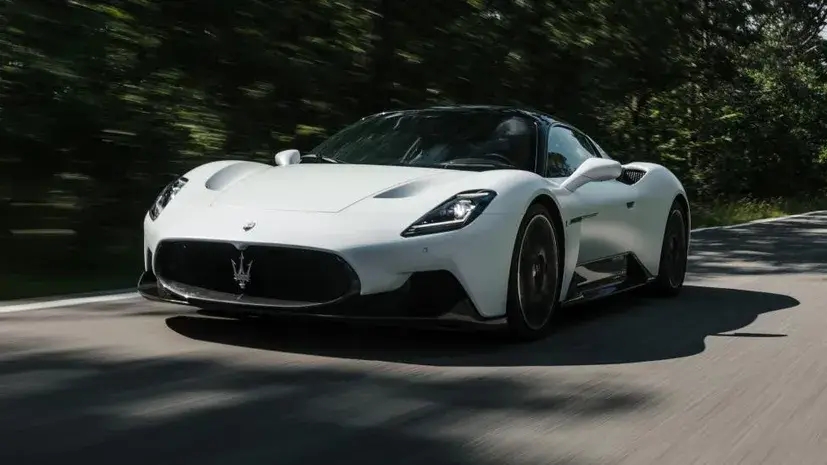
Maserati MC20
A new Maserati ‘super sports car’, a halo product for sure but also a massive statement of intent. We fully endorse Maserati’s stubborn refusal to become a footnote in the automotive annals. Like several other Italian names – and a few British ones for that matter – commercial realpolitik has come close to permanently shuttering what was once a name to conjure with, one that substantially pre-dates Ferrari and Lamborghini and is arguably better bred than its higher profile neighbours, depending on who you ask. Some cynics have suggested that Maserati should be quietly pensioned off so we can enjoy the likes of the original Ghibli, Mexico and TG’s personal favourite, the Allemano-bodied 5000 GT, in peace. Well the MC20 gives that idea the bird.
Historically, Maserati is more of a GT concern and has a greater fealty to the eternally romantic if hopelessly outmoded concept of heading across Europe by car, companion and luggage on-board for the ride. The MC20 is certainly a more appealing way of getting to Chianti-shire than via Ryanair, not to mention a seriously full-blooded supercar proposition. Although the insanely beautiful mid-Fifties A6 GCS is cited by group design director Klaus Busse as an influence, Maserati has really only been here once before, with 2004’s magnificent MC12. (We might grant you Bora and Khamsin, at a push.) That proved itself to be in possession of serious motor racing chops, triumphing in the FIA GT championship in 2005 and ’06.
Of course, it was was also essentially a remixed Ferrari Enzo, from a period when the old foes temporarily found themselves under the same roof. Now Maserati has autonomy – as one of approximately 63 different brands under the Stellantis banner – and the MC20 is 100 per cent a Maserati. There’s nothing in here that you’ll find elsewhere in the empire, even if it does somewhat resemble a scaled-up Alfa Romeo 4C. That was very pretty and pretty underwhelming; the MC20 is a thing to savour, whether in the quasi-marble effect Bianco Audace colour, Blu Infinito or Grigio Mistero. (Literally everything sounds better in Italian, and we’re pretty sure there is no word for beige.) The snouty, pouty nose is a highlight, as is the Lexan rear window whose intakes form the Trident motif. The butterfly doors help ingress and egress, as well as optimising the aero numbers at the front without polluting the bodysides with appendages. Still, Maserati’s Centro Stile has added some pollution of its own in the shape of pointless little strips that run from the front wheelarches into the doors. As ever, make your own mind up about the design but know this, keyboard warriors: the MC20 looks marvellous in the flesh.
As with its forebear, it will go GT racing too, so they’re really not messing about here. Like McLaren but unlike Ferrari, Maserati has gone the carbon fibre route for the MC20 (Ferrari insists aluminium is fine at this level and reserves carbon composites for its hypercar unobtanium) for maximum structural integrity and reduced (if not minimal) weight. Maserati says the top half is more design-oriented, and the lower half is where aerodynamics have primacy. Highlights here include vortex generators at the front, a hump in the floor which rises in the middle to feed air to them before reconnecting with the chassis further along, and door sill ducts to aid airflow to the engine compartment. The MC20 was developed in a little over two years using an arsenal of simulation tools in Maserati’s Innovation Lab. The company says that 97 per cent of the car’s development was done virtually.
Forget the looks and the chassis, this is the MC20’s star turn. It’s an all-new, clean sheet unit dubbed Nettuno – for Neptune, holder of the Trident… see what they did there? – which features technology so advanced there are patents pending on it. It’s a 3.0-litre, twin turbo six-cylinder, with a 90° V angle and dry sump, making 621bhp at 7,300rpm and 538lb ft of torque from 3,000rpm. Maserati claims a specific power output of 207bhp per litre, so the numbers are more than there on paper. But the secret bit is Formula One-grade pre-chamber combustion – called Maserati Twin Combustion – which pre-empts the traditional spark plug to create a bigger and more efficient burn. There’s direct and indirect injection too, working at 350 bar, all in the name of lowering emissions and reducing fuel consumption. It sits noticeably lower too, with promising consequences for the centre of gravity. Bridgestone developed bespoke rubber with an assymetric tread pattern, while local heroes Brembo supply the brakes: six-piston carbon ceramic jobs that need some heat in them before they really do their thing. As we discovered pulling away from Maserati’s HQ in Modena city centre.
Lotus Evija
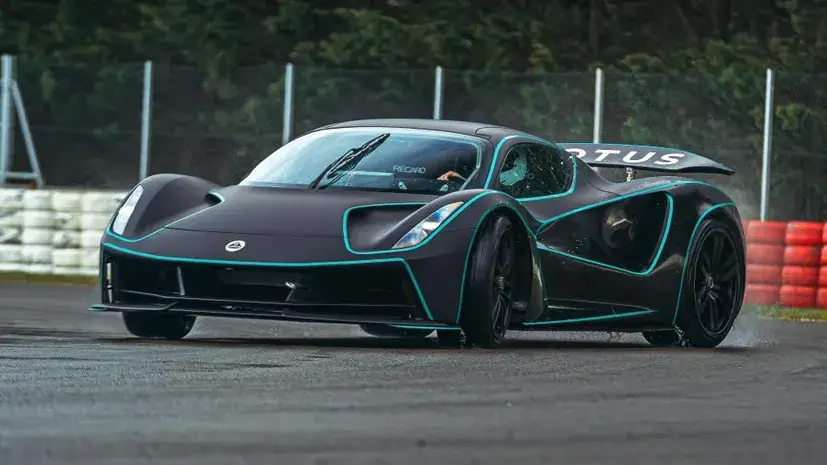
Lotus’ Hethel test track, the first person in the world to experience the Evija from behind the wheel and half the workforce is watching from the pit wall… including the new boss Matt Windle. It’s an honour but also a responsibility, and the Evija’s raw numbers weigh heavy on the mind.
In finished form the 130 examples will cost £2.4m each… for that you get four motors, four-wheel drive, 1,972bhp, 0-62mph in well under three seconds, 0-124mph in six seconds, and perhaps most startling of all it’ll go from 124mph to 186mph in half the time it takes a Bugatti Chiron. For today’s exercise we’ve only got access to 1,600bhp, 1,250lb ft of torque and a top speed capped at 140mph. We’ll manage.Far from it… in appearance at least. The interior is a mass of metal and exposed wires, the body panels are tatty and wrapped in a Tron-style livery of Top Gear’s own design (an idea linked to the glow-in-the-dark cover on the latest Electric Awards issue of the magazine) and this is a passive prototype – no active aero, no traction control, no ESC, no torque-vectoring, basic ABS – but still with 80 per cent of its full performance uncorked. Which may explain one particular ‘moment’.It started with a fizz, the unmistakeable sound of rear tyres spinning up, progressed to an angle not entirely parallel with the straight piece of track I was supposed to be launching down, and almost ended in a ball of fire. But somehow I reacted, the car righted itself and I snapped out of slo-mo mode pointing in the right direction. In hindsight, doing a standing launch on a wet track on Trofeo Rs probably wasn’t the best idea, but that’s the thing about the Lotus Evija, its unfathomable performance is so accessible and exploitable that it lulls you into a false sense of security. That’s my excuse anyway, and I’m sticking to it.What you feel right away is that low centre of gravity, officially lower than an Evora, but unlike a skateboard chassis with the mass spread out towards all four corners, the Evija really wants to rotate, to change direction on a pin head – a big benefit of concentrating all that mass in the middle of the car. “We liken it to someone in an office chair. Put their arms and legs out and try to rotate them, it takes a lot of effort,” Gavin Kershaw, the man responsible for making all Lotuses handle like Lotuses, explains. “Get them to curl up into a ball and you can flick them from side to side.”
Unlike the flat skateboard battery you’ll find in most mainstream EVs these days, or even the T-shaped pack in the Rimac C_Two and Pininfarina Battista, all the cells sit behind you in a pyramid-shaped pile. “We wanted the cockpit-forward feel of a Group C racer,” says Kershaw. “Plus you couldn’t sit this low, and the roof would have been 200mm higher.”
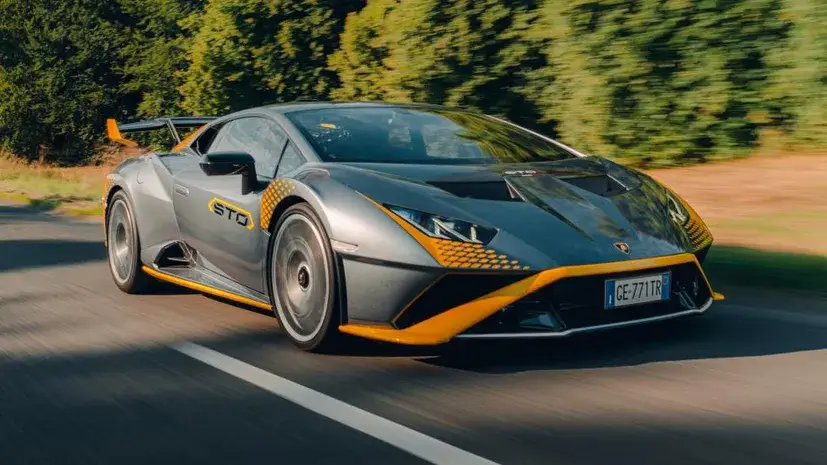
Lamborghini Huracán STO
A Lamborghini Huracán turned up to… well a good notch above the Performante. The new STO (Super Trofeo Omologata) claims to take the road-going Lambo experience a step closer to the Super Trofeo Evo one make racer and GT3 Evo cars. Lamborghini claims it’s the first car they’ve developed where track ability takes precedence over road driving. Pushed further than the Aventador SVJ even, in a bid to tackle rivals such as McLaren’s 620R or 765LT, the AMG GT Black Series and whatever Ferrari chooses to name the inevitable hardcore version of the 296GTB.
As far as numbers go, the STO’s engine struggles to hold its head up in that company. The 5.2-litre V10 is unmodified from the Performante, developing 631bhp and 416lb ft. But as ever, numbers tell little of the tale. The sheer ferocity and volume delivered by this 8,500rpm naturally aspirated motor make it feel even quicker than its claimed acceleration (0-62mph in 3.0secs, 124mph in 9.0).
The main mods over the Performante are the removal of the front driveshafts – the STO is purely rear-drive – the addition of rear-wheel steering, further weight saving and a lot of aero work. All told it’s 43kg lighter, which doesn’t sound that much. Apparently removing the front drive gubbins only saves 20kg, while 4WS adds 8kg back in. A thinner windscreen is 20 per cent lighter, there are magnesium wheels and carbon body panels that contribute to a 1,339kg dry weight. Light, but a 765LT has a dry weight of 1,229kg…
The aero, as you can see, has moved on more. And not subtly. Lambo says downforce is up 53 per cent compared to the Performante, which – some background reading suggests – developed 350kg at 186mph. Interestingly, Lambo has abandoned the ALA technology that ingested air at the base of the rear spoiler’s pillars and blew it out along the trailing edge. This is a simpler strategy: a manually adjustable, three position rear wing.
Far from it. For starters, there are unusual fins down either side to help channel air towards it, plus the gaping roof duct which isn’t – as you’d assume – an intake for the engine. Instead it simply ducts cooling air down into the bay. Look closely at that and it’s gimmicky.
Everywhere you look there are ducts, slats, vents and channels. Underbonnet storage has shrunk to 38 litres (it’ll take a helmet) so radiator air can be expelled up the bonnet. That one-piece front panel (Cofango is Lambo’s name for it) is a pain to remove.
Elsewhere the tracks have been widened, there’s stiffer suspension bushes, new anti-roll bars and two-stage magnetic ride dampers. The brakes are Brembo’s CCM-R set up, claimed to give a 25 per cent power increase. Sharp at the top of their travel, the 390mm front and 360mm rear discs are fantastically effective and fade-free. A big step on from previous Lambos with carbon brakes, which tend to be dead underfoot with little initial bite. These are easy to modulate, but like to be worked hard.
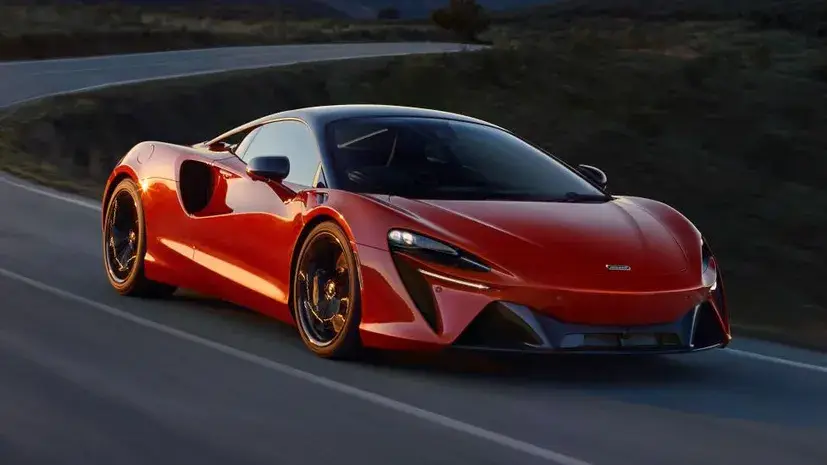
McLaren Artura
This is new. Not as in new-improved, but new as in new. The first MP4-12C was 25,000 McLarens ago, and every model since has basically been new-improved, or new-cut-price. They run different versions of the same V8 engine with more or less power and sometimes hybrid boost, the same seven-speed transmission, basically the same suspension, different versions of the same composite tub (well, except the three-seat Speedtail).
The Artura chucks away all that the hardware, while, you've got to hope, embodying the knowledge gained in a decade of ceaseless optimisation. Every single one of the systems I listed in that first paragraph has been swapped out for something entirely fresh. New as in new.
It's a plug-in hybrid. The Artura's 671bhp falls some way short of the McLaren's original hybrid, the 903bhp P1, though its £182,500 sticker is a whole lot less. You’ll remember that the P1, along with the Porsche 918 and LaFerrari, elevated the hypercar bar so high that none of those manufacturers has been ready with a successor in the eight years since.
Anyway we have moved, haven't we, beyond the time when adding hybrid boost to a fast car would bring out the pitchfork mob. A quick ogle at the world's supercar-dealer websites – if you can have a quick ogle without getting snagged into endless fantasy diversions – reveals that P1s are advertised at about £1.5 million these days, and Sennas, which are supposed to lap roughly as fast but don't have hybrid, are half that. OK the P1 is the rarer, prettier and more collectable of the pair, but I think my point stands: the market doesn't distain hybrids.Up to now, the hybrids – P1 and Speedtail – have been the apex of McLaren's range at squillionaire prices. No longer. The Artura is in effect a replacement for the 570S. You know, the McLaren for the people. The GT will continue, and the 720S. The Artura's price and power output neatly split those two. McLaren has a habit when it introduces any new supercar of claiming (and usually delivering) that it can combine the dynamics of the last-gen harum-scarum LT model with the comfort and usability of one of the core cars. Same this time. We're told the Artura is as much fun as a 600LT. If it is, then we are very much game on. It has similar performance numbers too.
Those numbers are 0-62mph in 3.0 seconds, and 0-125 in 8.3, en route to 205mph. You might possibly feel a mild deficit between that kinda thrust and what you get by paying more for a 720S or indeed Ferrari F8. But what I'm expecting is something more striking: a different kind of thrust development. "We knew we had homework to do on throttle response," admitted an engineer. Perhaps because we've been telling you for years that McLaren’s V8 is sizzling near the red-line but laggy in the mid-revs. So the new V6's instant-responding electric motor is claimed to cut that delay in half, and that'll surely make things more controllable in corners as well as straights.
The electric motor is a disc-shaped axial-flux unit just 65mm thick, sandwiched in the clutch housing, and as it turns at crank speed you can simply add its output to the engine's. Which means 577bhp from the V6 and 94 from the motor equals 671. For torque you can't add them because the motor's peak torque is at lower revs than the engine's. It's 431lb ft from the engine, and a total of 530. The motor's peak is 166lb ft, and it arrives the moment you ask.
Skip 11 photos in the image carousel and continue reading
The engine spins to 8,500rpm, which ought to be sufficiently exciting. It's a 3.0-litre 120-degree job. That wide angle gives space for the turbos in the V, allowing short equal-length exhaust manifolds into the turbines, to cut lag. Direct injection and particle filters keep things clean. The 120 degree angle also demonstrates they didn't just give the former 90-degree V8 a bilateral-cylinderectomy. McLaren had Ricardo do most of the design on that old engine, as well as build it. This time the design is pretty well all McLaren's.
The new twin-clutch transmission is an eight-speed. It doesn't have reverse because the electric motor just turns backward instead. A 7.4kWh (net) battery is enough for a rated 20 miles of range after a plug-in. And apparently P1 owners have always enjoyed gliding silently away from home, or through towns.
Fastest Supercars

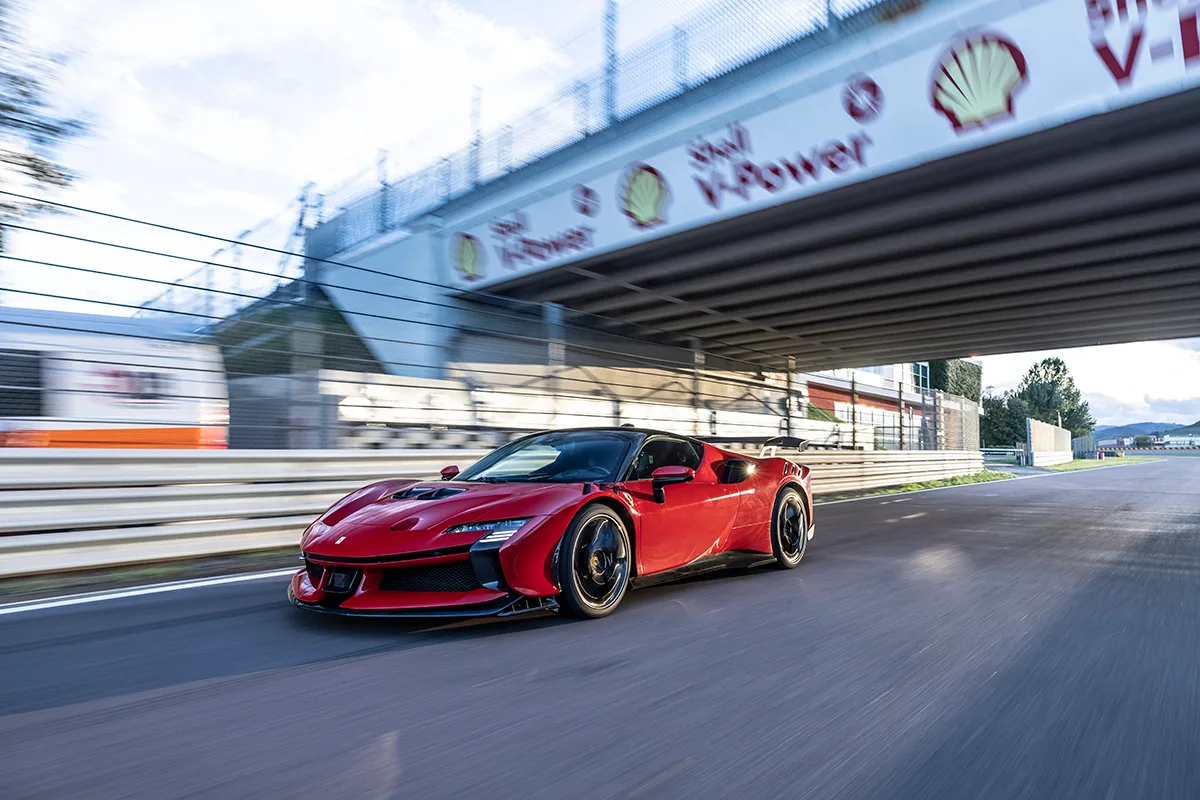
Ferrari SF90 XX Stradale
When you say the word 'supercar', most car lovers will immediately think of Ferrari. So, seeing the legendary brand featured in our top 13 is not surprising.
Ferrari has pulled out all the stops with this car. Its aggressive aerodynamics give it amazingly high levels of downforce and grip, while power comes from a 4-litre V8 engine coupled with three electric motors.
This all makes the SF90 XX Stradale very much a racing car that you can technically drive on the public road, although with nearly 1,000 brake horsepower to play with, you might want to wait for a dry day – and an empty stomach.
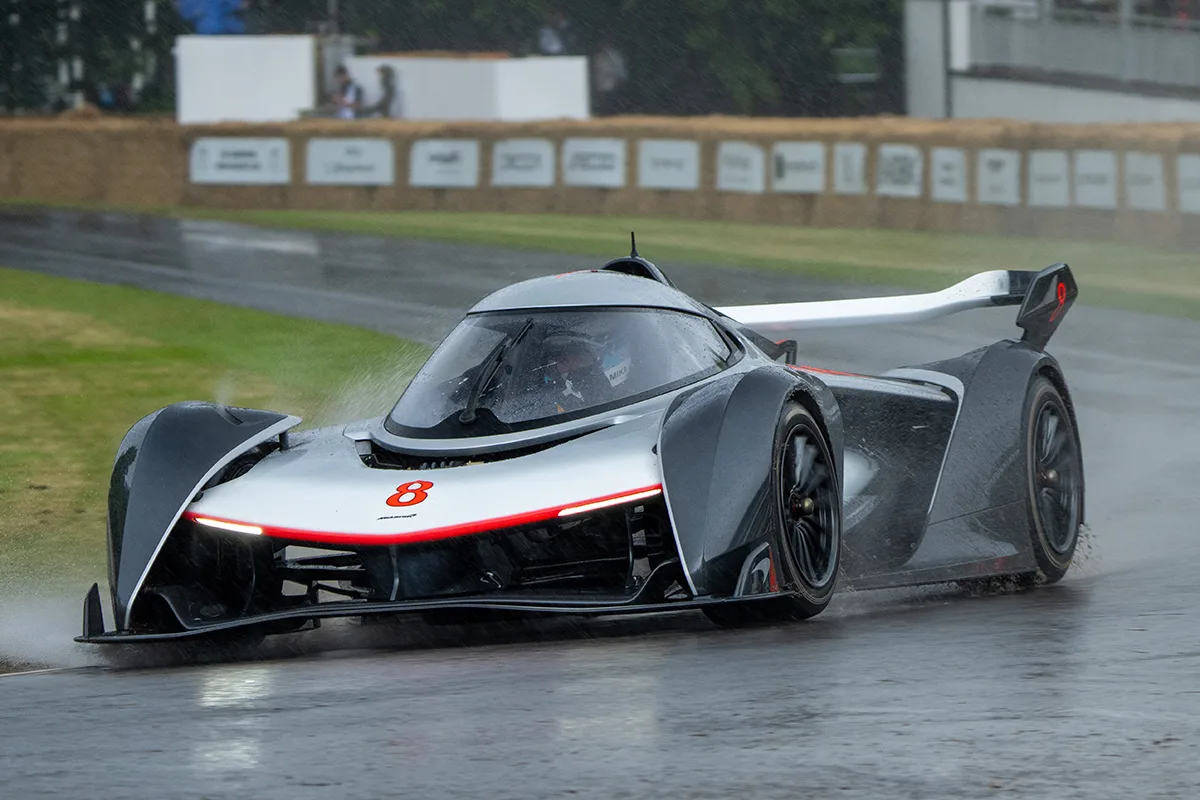
McLaren Solus GT
Better known for its long and successful history in Formula One (F1), McLaren also has form when it comes to some of the finest road cars ever built. The Solus GT is the pinnacle of all they have learnt over the last 60 years, combining amazing performance and engineering prowess.
McLaren themselves describe this as the closest thing to an F1 car that you can get. With a single-seat layout and a screaming V10 engine in the back, this machine harks back to the F1 cars that stars like Mika Häkkinen were driving twenty-five years ago.
There will only be 25 of these amazing cars built, so finding one for sale might be a bit tricky. And with only one seat, there won't be many people who will get to experience this amazing machine.
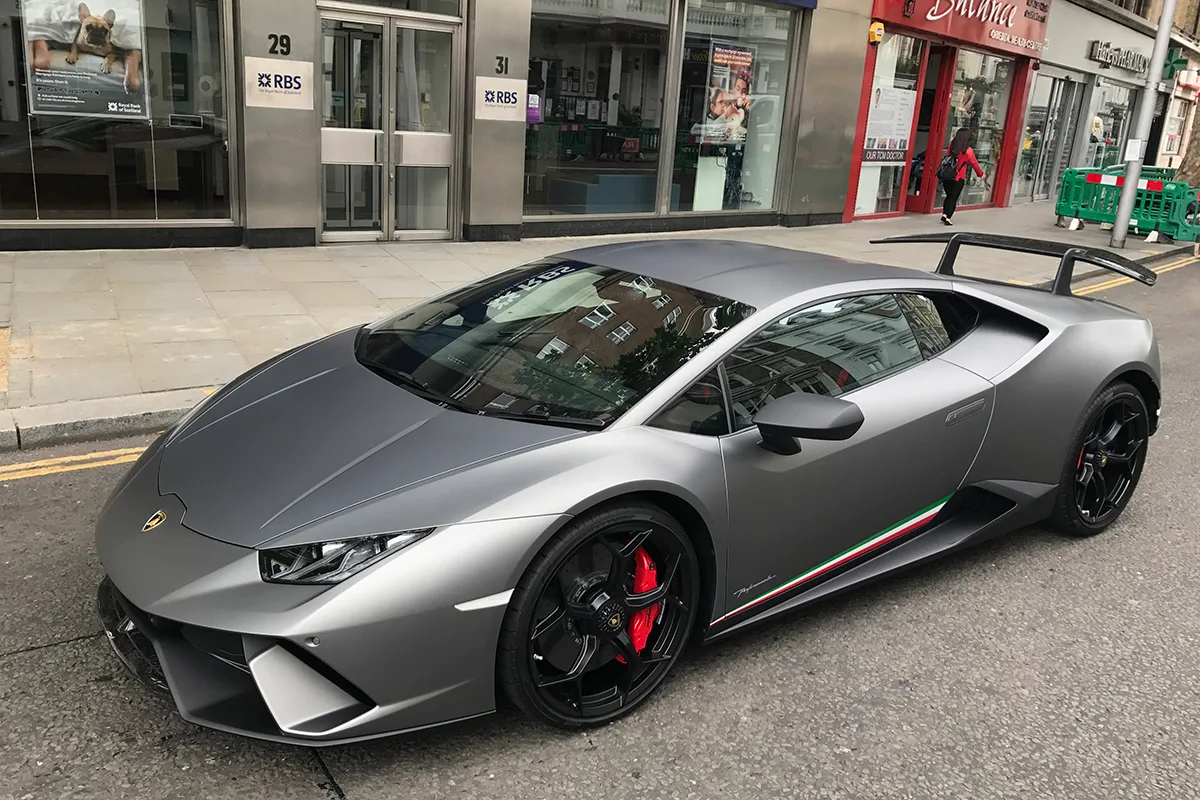
Lamborghini Huracan Performante
OK, so the Lamborghini Huracan Performante is technically no longer being made, but you can pick up a used example relatively easily. This is mainly because, unlike many other cars on this list, Lamborghini had the good sense to build nearly 2,000 examples of this model.
This mid-engined, four-wheel drive car has some amazing performance to offer, with 0-100 km/h taking a mere 2.5 seconds. Its top speed is an impressive 328 km/h, which is probably fast enough for most people.
And because it is a Lamborghini, it makes some very loud noises. Perfect if you hate your neighbours.
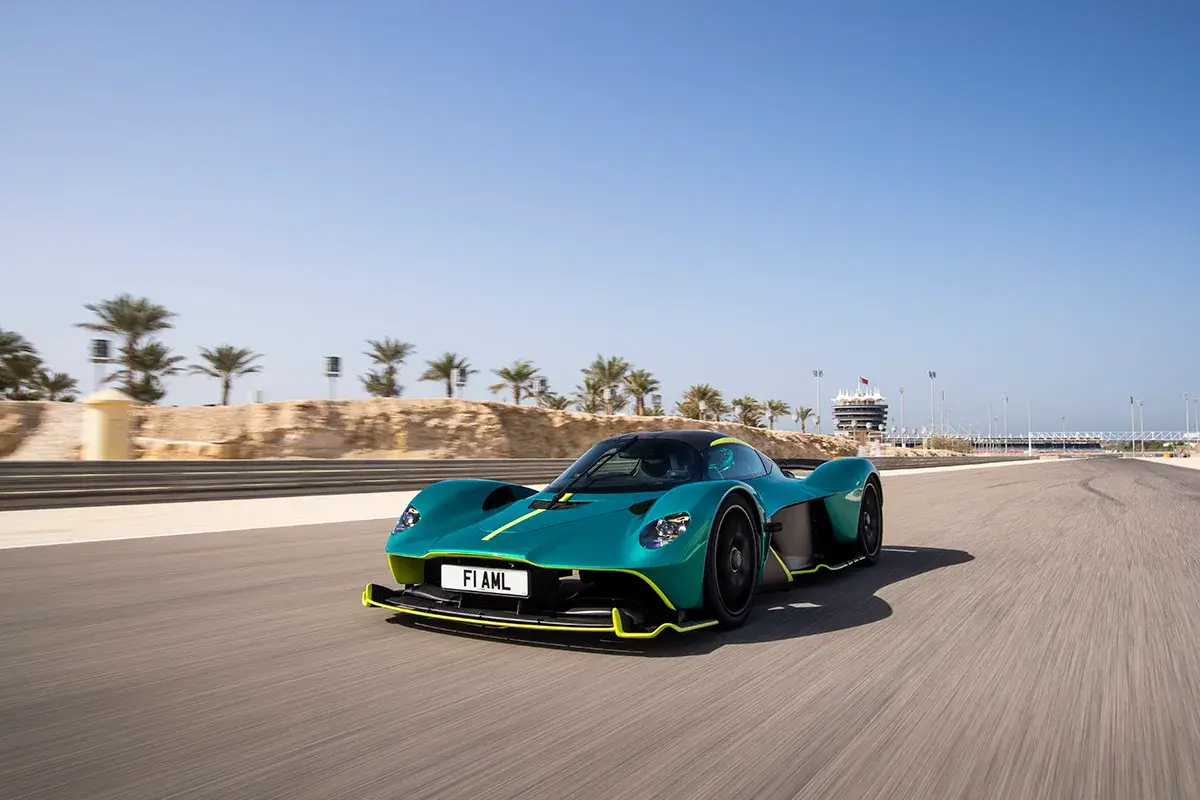
Aston Martin Valkyrie
Aston Martin is the car of choice for James Bond, as well as for fans of British engineering excellence. The hybrid supercar was built by Aston Martin (with help from Red Bull Racing Advance Technologies), with 275 cars of various specifications being produced in total.
The brief for this car was to build a track-oriented car entirely usable and enjoyable as a road car. F1 design genius Adrian Newey was one of the masterminds who worked on the model, and he knows a fair bit about producing fast cars.
Power comes from a 6.5-litre V12 engine coupled to a hybrid motor, giving this lightweight car 1,160 brake horsepower. This gives a 0-100 km/h time of 2.6 seconds and a top speed of around 356 km/h.
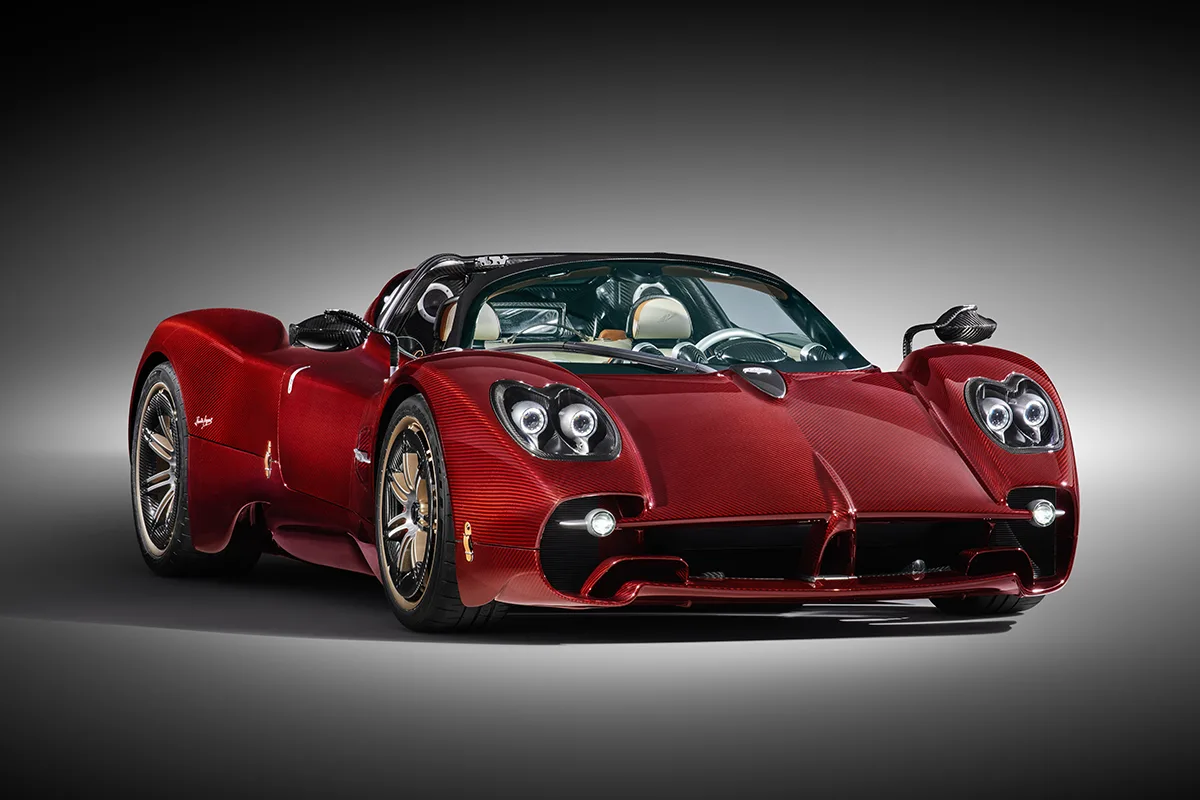
Pagani Utopia
Pagani is a relative newcomer to the car designing game, having shown its first performance model in 1999. However, they have quickly built a reputation for beautiful and quick cars like the Zonda and the Huayra. The Utopia is their latest offering and carries on that tradition with confidence.
The engine is built by Mercedes-AMG and produces an impressive 852 brake horsepower, meaning that this little car will hit 100 km/h in 3 seconds flat. Top speed is limited to 'only' 350 km/h, and only 229 cars will be built in total. Plus, you'll need to find over €3 million (around £2.5 million or $3.3 million) if you want to join this very exclusive club.
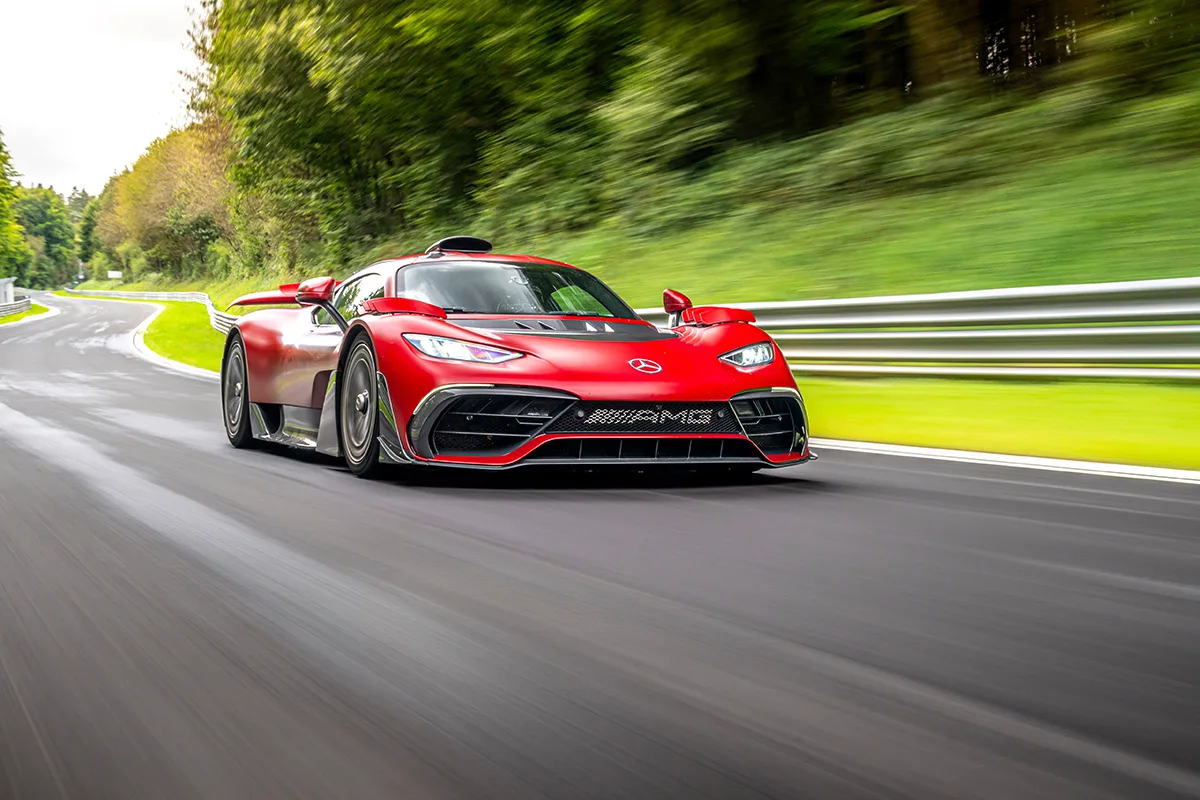
Mercedes AMG One
The Mercedes AMG One is a limited-production hybrid featuring loads of technology straight off of the F1 track. The engine (a 1.6 litre V6 joined with a powerful electric motor) is actually from Mercedes' F1 car from 2016, raced by Lewis Hamilton and Nico Rosberg.
After a series of delays, production finally began in 2022, with 275 units ultimately built in the UK. Even with an F1 engine, top speed is limited to 352 km/h, with the 0-100 km/h run taking 2.9 seconds.
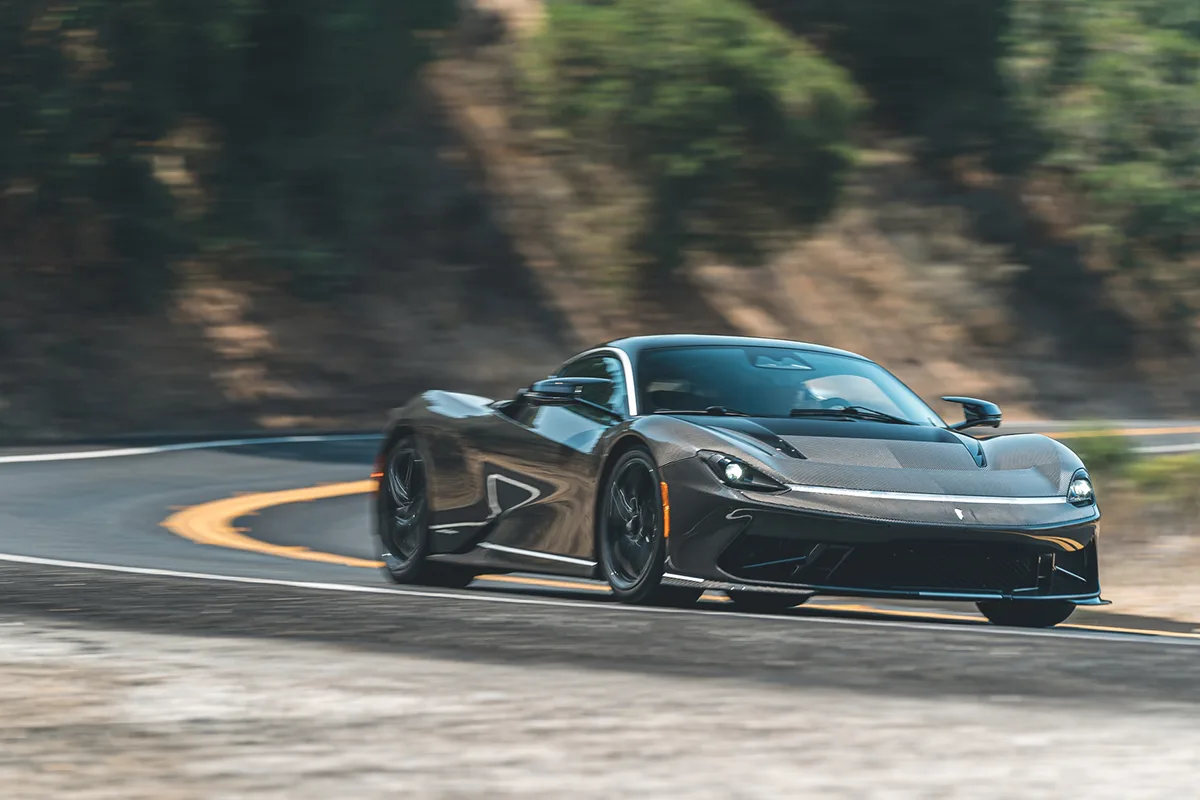
Pininfarina Battista
The Pininfarina Battista is a very, very quick car, mainly because it essentially has an electric motor on each wheel. 0-100 km/h takes less than 2 seconds, and you'll be going over 300 km/h after a mere 11 seconds.
The car is named after the company's founder, Battista Pininfarina, who set up his design business back in 1930. And we think he would be very proud of the car that bears his name.
Pininfarina has suggested that this is the most powerful car to come out of Italy – which is a strong claim when you consider the competition from famous names such as Ferrari, Lamborghini and Maserati. But with those performance figures, we're not going to argue.
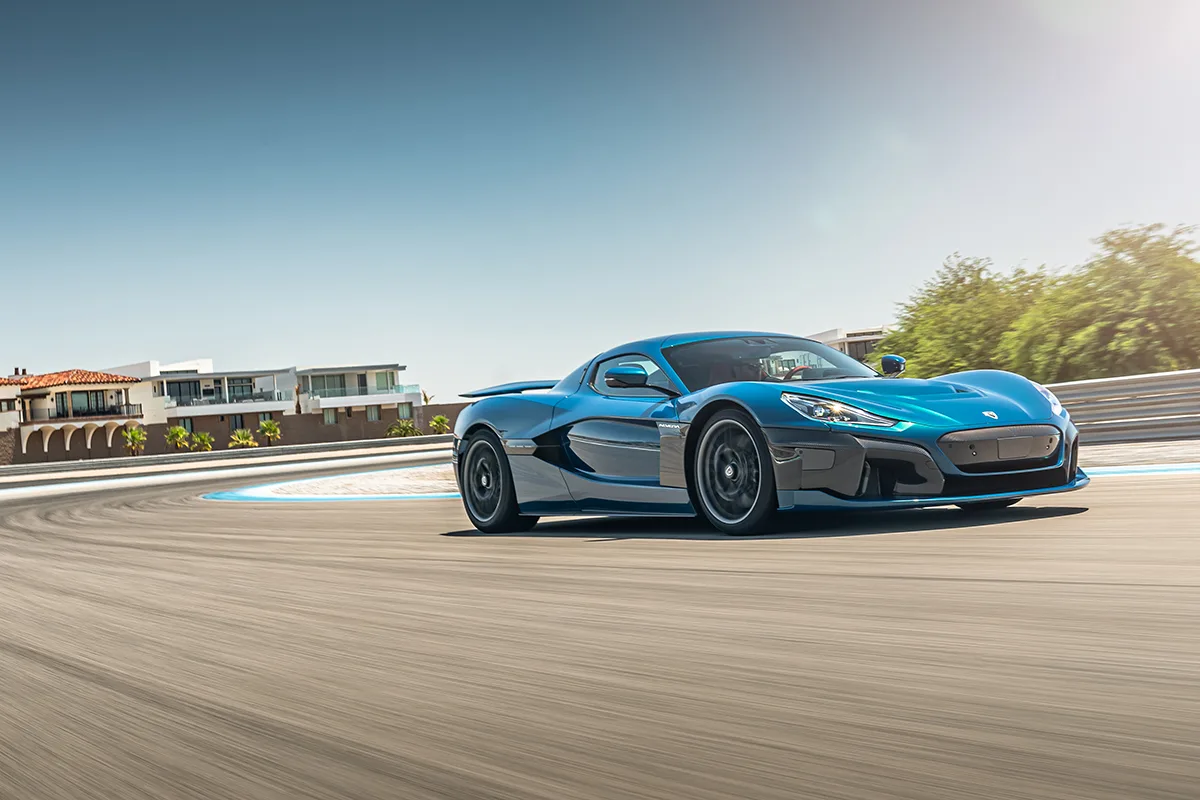
Rimac Nevera
The Rimac Nevera is an all-electric supercar which has shattered many electric car records. This Croatian supercar is based on the same platform as the Pininfarina Battista, with a motor on each wheel, but with a slightly different aerodynamic package.
The Nevera holds the title of the fastest electric production car ever built, with a slew of records to prove it. In just one day, it smashed an astonishing 23 acceleration and braking records – including a blistering 0–100 km/h sprint in just 1.81 seconds, and 0–100 km/h and back to a standstill in under four.
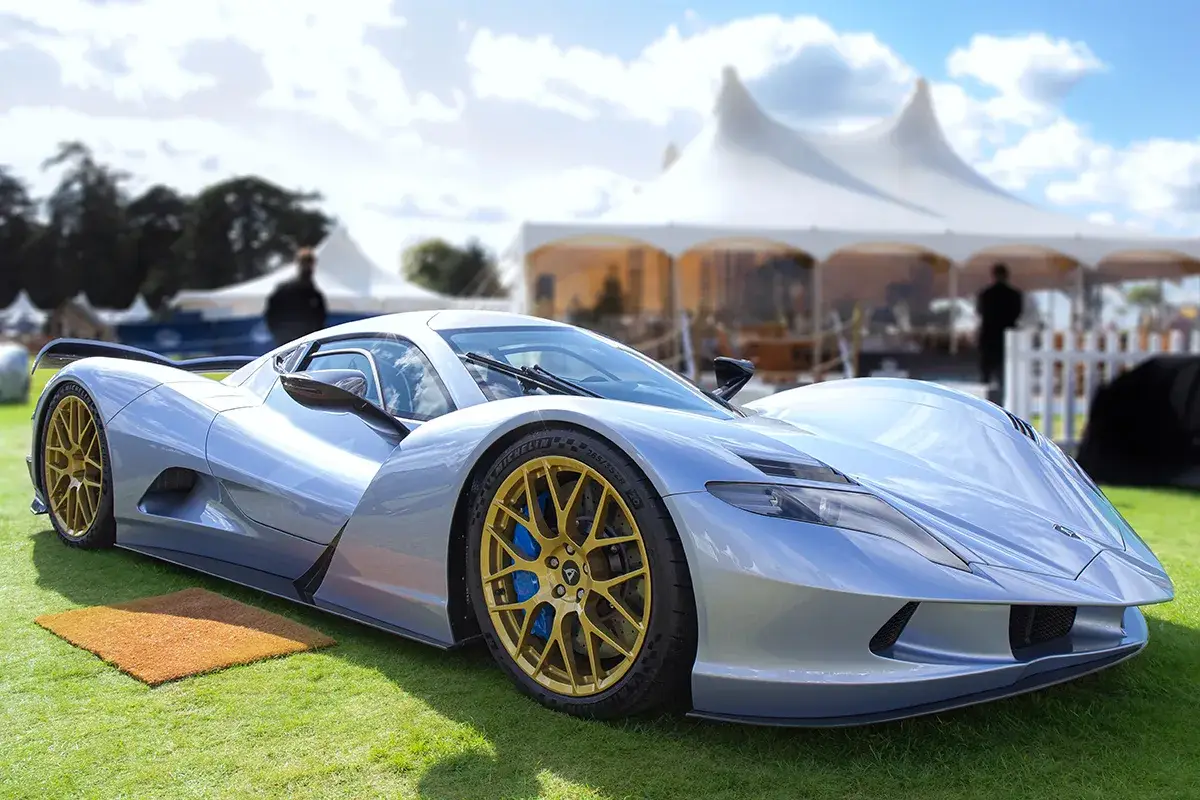
Aspark Owl
Japanese firm Aspark first announced the Owl in 2019 with a limited production run starting in 2020. The car is powered by four powerful electronic motors, which can propel the car up to 100 km/h in less than 2 seconds.
The Aspark Owl boasts a range of 400 km on a full charge – though you can expect that figure to drop sharply if you’re pushing its official top speed of 438.7 km/h. It comes with an eye-watering price tag of €2.9 million (around £3.5 million or $3.2 million), so if you’re planning to buy one, best start saving yesterday.
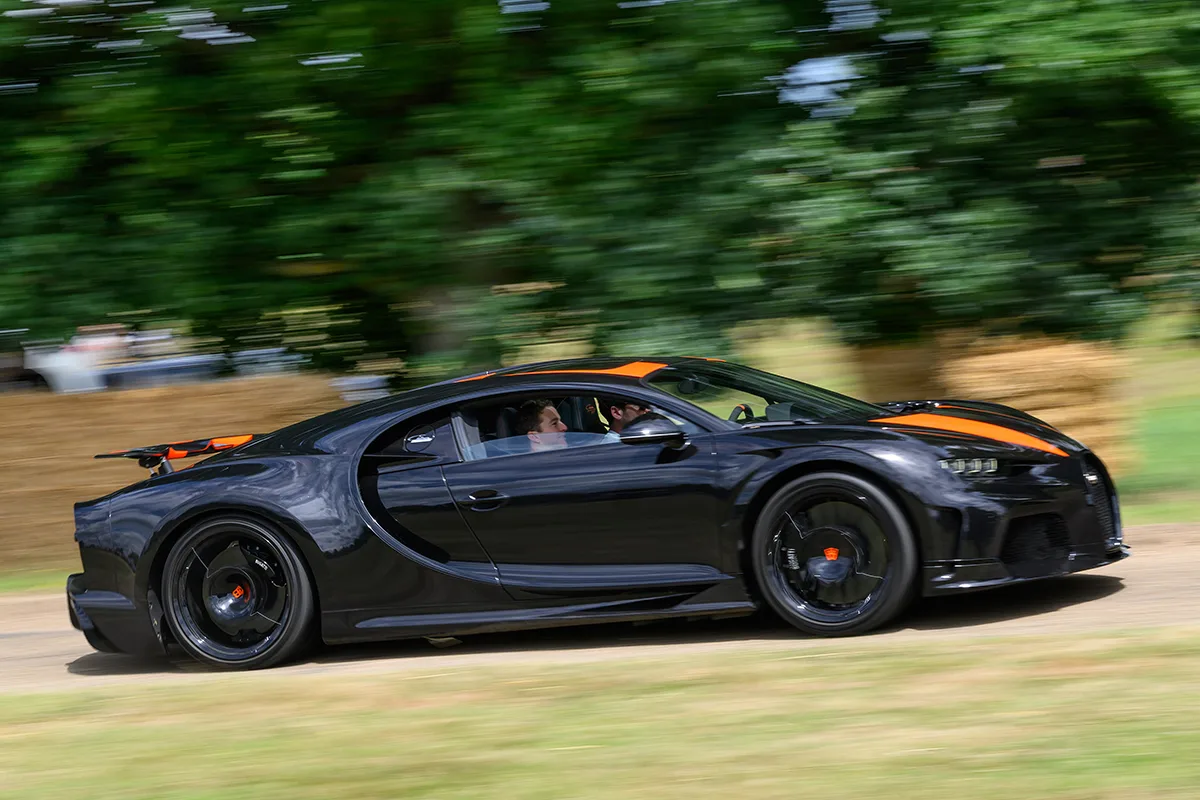
Bugatti Chiron Super Sport
The Bugatti Chiron Super Sport takes to the road at the Goodwood Festival of Speed. Photo by Tim Scott/Bugatti
It's hard to think of a more evocative name in the world of motorsport than the French company Bugatti. Having disappeared for a while, the company has come back strongly in the 21st Century with a string of powerful and well-engineered cars that have put this brand back at the forefront of the supercar field.
The Bugatti Chiron Super Sport is one such car. With a large engine fitted with four turbochargers, this behemoth is limited to a top speed of 440 km/h, although it has reached over 490 km/h during an official test run.
While its acceleration can't quite match the sheer violence of some of the electric cars on our list, it can still show all of them a clean pair of heels as it goes through the gears.